


What is ESG, and why is it becoming increasingly important for businesses? In recent years, ESG has become one of the most discussed topics in the global business community. While businesses traditionally focused primarily on revenue, profit, and market expansion, international partners, banks, and investment funds are increasingly evaluating companies based on a broader range of non-financial factors, with ESG becoming an important consideration.
Vietnamese businesses, particularly those involved in exports and global supply chains, are also beginning to face requirements related to environmental performance, labor practices, carbon emissions, and transparency in corporate governance. In this context, ESG is no longer a concept relevant only to large corporations. It is gradually becoming an important factor that can directly influence the competitiveness and long-term development of Vietnamese businesses.
1. What is ESG?
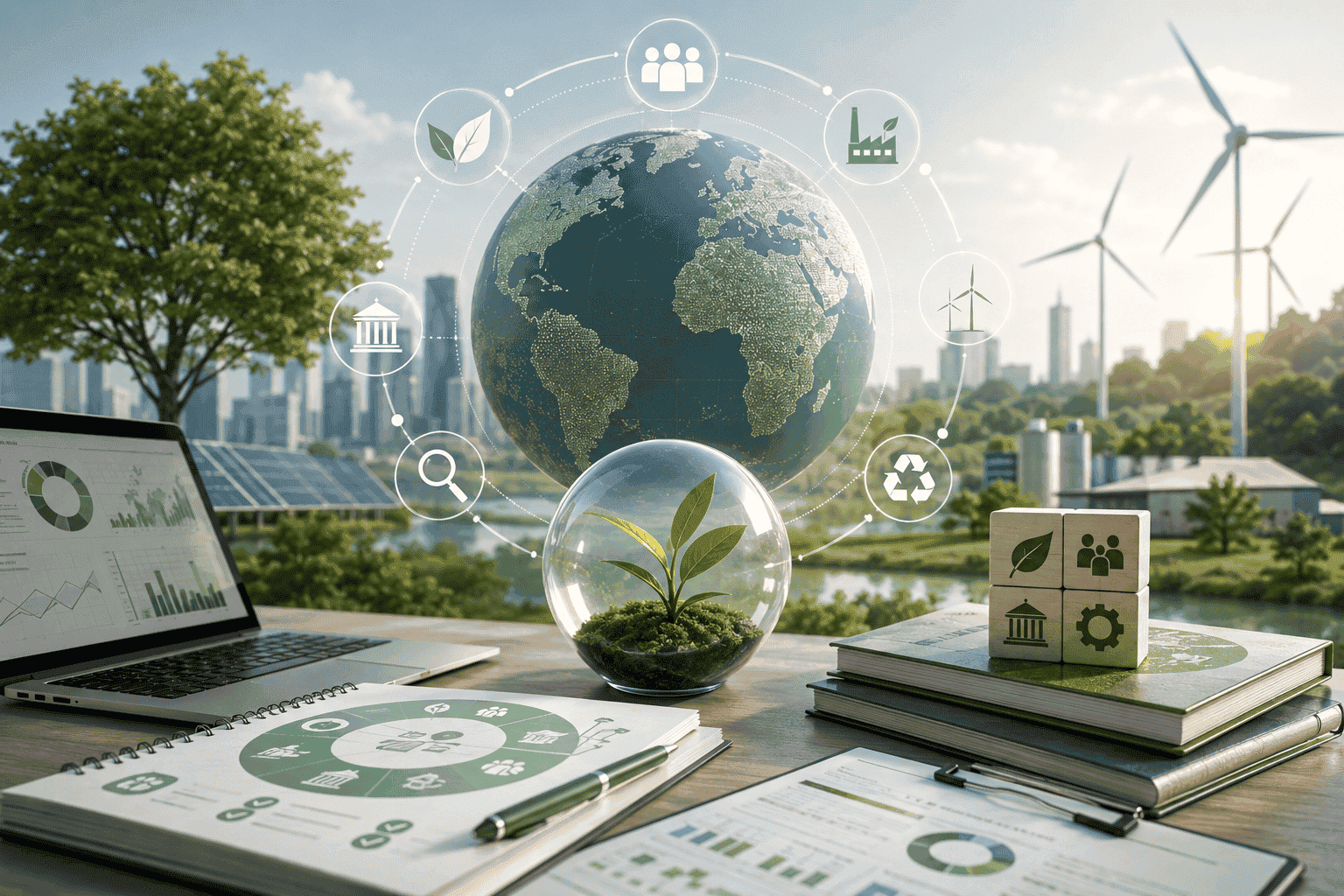
ESG stands for Environmental, Social, and Governance. It’s a set of criteria used to assess the level of sustainability and responsibility a business demonstrates in its operations.
Unlike traditional valuation methods that focus solely on revenue and profit, ESG is more concerned with how businesses operate, manage risks, and develop in the long term.
1.1. Environmental
Environmental factors relate to how businesses manage their impacts on the natural environment. This may include greenhouse gas emissions, energy consumption, water resource use, waste treatment, or environmental impact reduction activities.
Currently, many manufacturing businesses are being required to monitor carbon emissions, control energy consumption, or establish wastewater treatment processes that comply with international standards.
For export businesses, environmental factors are increasingly becoming an important aspect in the supplier evaluation process of international partners.
1.2. Social
Social factors relate to a company’s responsibility towards its employees, customers, and the community. This typically includes working conditions, workplace safety, employee rights, equality in the workplace, and corporate social responsibility.
In many sectors, such as textiles, footwear, or industrial manufacturing, international partners are now paying more attention to labor conditions and transparency in the supply chain.
A business with a good work environment and clear labor policies typically earns a higher level of trust from customers and partners.
1.3. Governance – Corporate Governance
Governance factors relate to how a business is run and controlled. This includes financial transparency, risk management, business ethics, management structure, and legal compliance.
In an increasingly complex business environment, management capabilities are becoming a crucial factor in helping businesses maintain stability and achieve sustainable long-term growth.
A company with a good governance system typically earns greater trust from banks, investors, and international partners.
2. Why is ESG becoming a global trend?
ESG is not a short-term media trend but is gradually becoming the new standard in global business operations. Many countries and large corporations are now promoting sustainable development to reduce environmental impact and build more stable supply chains in the long term.
2.1. Pressure from the international market
Many major markets, such as Europe and North America, are increasingly interested in environmental standards and sustainable development. This has led international corporations to begin requesting more ESG-related data from their suppliers.
In the future, ESG could become an important part of the supplier selection criteria for many global businesses.
2.2. Sustainable Investment Trends
Many international investment funds now not only evaluate profitability but also consider a company’s potential for sustainable growth before deciding to invest.
A company with a clear ESG strategy is generally rated more positively in terms of its risk management capabilities and long-term growth orientation.
2.3. Developing a Green Supply Chain
Global consumers are increasingly interested in environmentally friendly and socially responsible products. This puts pressure on businesses in the supply chain to adapt to meet market demands.
In addition, major goals such as Net Zero, carbon emission reduction, and the green transition are also driving the development of green supply chains globally.
3. Why should Vietnamese businesses start paying attention to ESG?
3.1. Pressure from customers and export markets
Many Vietnamese businesses are now participating in global supply chains in sectors such as textiles, footwear, seafood, agriculture, and industrial manufacturing. In these sectors, many international customers have begun requesting more information from businesses regarding environmental, labor, and corporate governance practices.
Several international partners are now conducting ESG assessments of suppliers to control risks in the supply chain. This requires many businesses to prepare ESG data or develop sustainable development strategies if they want to remain competitive.
In the future, ESG may become one of the key conditions for businesses to continue participating in international supply chains.
3.2. ESG’s impact on access to capital
Not only international clients, but many banks and investment funds are also starting to pay attention to ESG when evaluating businesses.
The trend of green credit and green finance is currently developing in many countries. In this context, ESG can become an advantage that helps businesses improve their access to capital in the future.
For businesses planning to expand, raise capital, or collaborate with international investors, ESG is gradually becoming a topic that cannot be ignored.
3.3. ESG helps enhance image and competitiveness.
A business with a clear sustainable development strategy tends to project a more professional and stable image in the eyes of customers and investors.
In addition, many businesses have found that good management of energy, resources, and operational processes can help optimize costs in the long term.
In an increasingly competitive environment, ESG is not only a responsibility but can also become a competitive advantage for businesses.
3.4. ESG will gradually become the market standard.
Currently, ESG is not a mandatory requirement for all businesses in Vietnam. However, pressure from international markets, banks, and investors is increasing rapidly.
Many businesses previously believed that ESG was only suitable for large corporations, but the reality shows that an increasing number of small and medium-sized enterprises are also beginning to be affected by the requirements related to sustainable development.
Businesses that prepare early typically have more time to build data systems, management processes, and strategies that are more suitable for the future.
4. Where should businesses begin with ESG?
For many businesses, ESG is still a new and rather complex topic. However, businesses don’t necessarily need to implement everything at once. The important thing is to have a roadmap that is appropriate for their size and industry.
4.1. Assessing the current state of the business
The first step is usually to assess the current state of the business to identify existing environmental, labor, and governance issues.
Assessing the current situation will help businesses understand what needs to be prioritized before developing a long-term ESG strategy.
4.2. Building ESG data
One of the major challenges for many businesses is the lack of data related to ESG. Therefore, businesses need to gradually build systems to track data on energy, environment, labor, and governance.
ESG data will be a crucial foundation for building sustainable development strategies and ESG reporting in the future.
4.3. Developing a sustainable development strategy
After assessing the current situation and building a baseline database, businesses can gradually develop an ESG strategy that aligns with their growth goals.
An ESG strategy should not only focus on the environment but also align with the company’s business operations and long-term development goals.
4.4. Prepare ESG reports according to a suitable roadmap.
In many cases, preparing ESG sustainability reports according to international standards such as GRI is also a way for businesses to systematize data and enhance transparency in their operations.
Depending on their size and needs, businesses can choose a suitable implementation roadmap instead of trying to do everything at once.
5. Conclusion
Understanding what is ESG and how it affects business operations is becoming increasingly important in today’s global market. For Vietnamese businesses, ESG goes beyond environmental concerns. It can also influence export opportunities, access to capital, brand reputation, risk management, and long-term competitiveness.
As sustainable development continues to shape global markets, businesses that prepare early may be better positioned to adapt to new expectations from customers, investors, financial institutions, and international partners. ESG may not yet be a mandatory requirement for every business in Vietnam, but it is gradually becoming an important market standard that companies should be prepared for.
CCV aims to support businesses in ESG consulting, sustainability reporting, green transformation. And the development of sustainable business strategies aligned with international frameworks such as GRI.
By connecting sustainable development with business competitiveness. CCV focuses on helping businesses strengthen their ability to access international markets, green finance, and emerging opportunities in the transition toward a more sustainable economy.